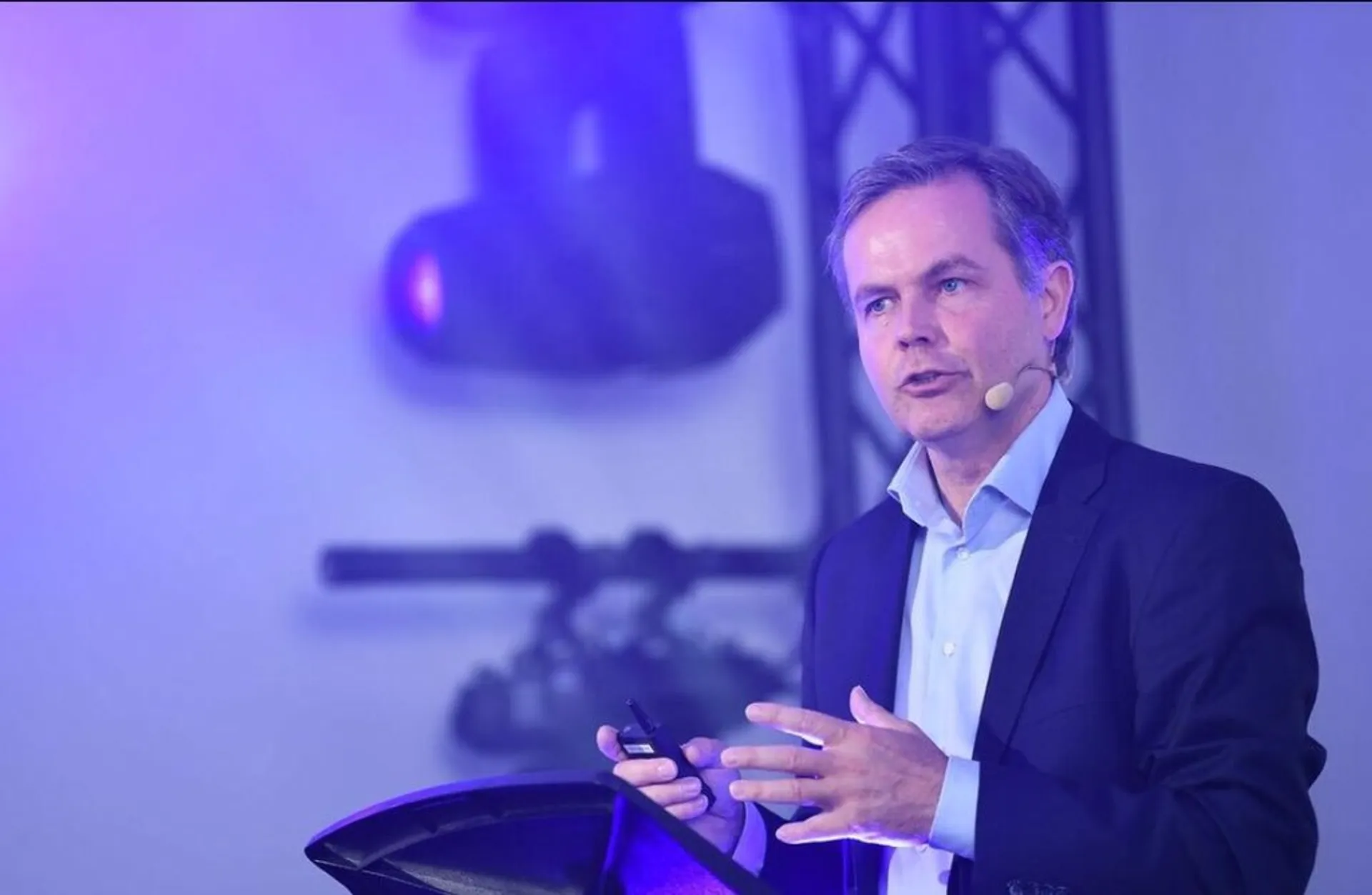
The "Food For Thought" session on Friday, April 2 is all about CSR or Corporate Social Responsibility. We will listen to fascinating cases from Sustenuto, PepsiCo, Port of Zeebrugge and the Club Foundation and learn how we can engage in sustainable and responsible business. Dirk Le Roy, founder and director of Sustenuto, gives us a sneak peek.
Day Dirk. Corporate Social Responsibility, it's a term you see popping up more and more lately, but what does it really mean?
The terms CSR or Corporate Social Responsibility and CSR or Corporate Social Responsibility are terms used for the responsibility of the impacts companies have on society. Those impacts can take many different forms. They can range from environmental impacts, such as waste disposal and soil pollution, to social impacts, such as dealing with customers and employees, or economic-ethical impacts, such as human rights and diversity.
At Sustenuto, you coach companies on CSR. In what ways?
At Sustenuto, we actually do two things. On the one hand, we help companies map out their plans and strategic goals around CSR, and on the other hand, we set up "learning networks. With these learning networks we give companies, in collaboration with UNIZO or CSR Campus, for example, the tools to get started themselves and learn how to implement CSR in their company.
I can imagine that for many companies CSR is still quite abstract and overwhelming. As a company, how do you take your first steps in this?
Start from your core business. Put all the branches of a company together and let them define their own chain. What sector are we in? What service are we creating? What influence or control do we have on the supply chain? Which of our activities can have an environmental, social or economic impact? In this way, you can easily define themes in which you can then work with advice, objectives and strategies.
Are there certain themes that you often see recurring?
Climate change is a topic almost everywhere. Whether it concerns services or production, climate is in 96% of all sustainability approaches. On the one hand, this is obviously due to the urgency of the change and the impact it has, just think of the increased use of recycled and reusable plastics in response to the "plastic soup" in the oceans. On the other hand, it is also a consequence of the policy goals that have been set. For example, the European Commission's EU Green Deal describes a large list of measures, from reduction of chemicals to sustainability in the food chain. Companies committed to CSR naturally take this into account.
So can any company contribute in Corporate Social Responsibility?
Absolutely. Of course, the contribution a company can make varies from sector to sector, but every company has an impact. We also notice that the importance of Corporate Social Responsibility continues to grow, especially in business-to-business. Companies like Ikea, Colruyt or Lidl are increasingly asking suppliers what they are doing regarding climate and sustainability. It is therefore important for every company to focus on this.
With the Club Foundation, Club Brugge is also focusing on CSR. What challenges does a soccer team face in terms of sustainable and responsible business practices?
The impact and challenges for a soccer team cannot be underestimated. Whether it's about the environmental impact of the stadium and the sustainable maintenance of your turf to the major socio-ethical themes such as respect and diversity. These are challenges that do not only apply within the team, but which, because of the position a soccer club occupies, are an enormous lever to the whole society.
Want to know more about CSR? Then register quickly for the third WNPA webinar with Sustenuto, PepsiCo, Port of Zeebrugge and the Club Foundation: click!